- 자국 연루 전쟁 발발 시 나라를 위해 싸우겠습니까? - Gallup International 다국가 조사 #참전
- 조사일 : 2023/12/15
- [GallupReport(20240311)_Fight_GIA.pdf] 다운로드
● 2024년 3월 11일(월) 공개 | 문의: 02-3702-2571/2621/2622
자국 연루 전쟁 발발 시 나라를 위해 싸우겠습니까?:
Gallup International 다국가 조사
→ 한국+세계 조사 결과 파일 다운로드(PDF)
/ 세계 조사 개요
· 2023년 10~12월 45개국 성인 총 46,138명 전화/온라인/면접조사(주제별 참여국 상이)
/ 한국 조사 개요
· 조사기간: 2023년 11월 2일~12월 4일
· 표본추출: 층화 집락 확률 비례 추출
· 응답방식: 면접조사원 인터뷰(CAPI)
· 조사대상: 전국(제주 제외) 만 19세 이상 1,550명
· 표본오차: ±2.5%포인트(95% 신뢰수준)
· 응답률: 29.8%(총 접촉 5,196명 중 1,550명 응답 완료)
· 의뢰처: 한국갤럽-Gallup International 자체 조사
조사 결과
────────────
자국 연루 전쟁 발발 시 나라를 위해 싸우겠습니까?
────────────
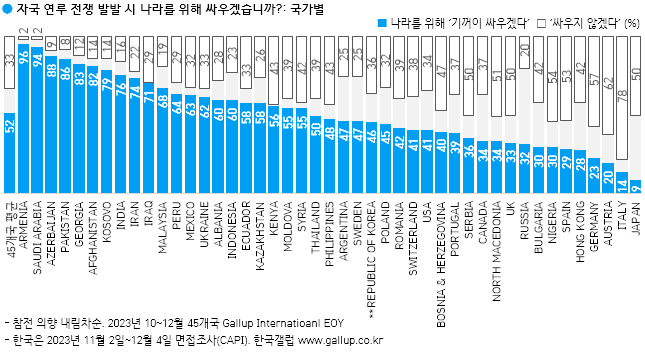
45개국 시민 중 52% '싸우겠다', '싸우지 않겠다' 33%
- 참전 의향자 많은 나라: 아르메니아(96%), 사우디아라비아(94%), 아제르바이잔(88%)...
- 참전 거부자 많은 나라: 이탈리아(78%), 오스트리아(62%), 독일(57%)...
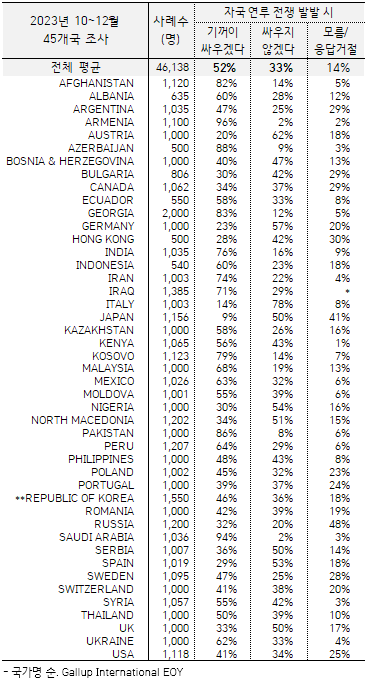
2023년 10~12월 갤럽 인터내셔널이 세계 45개국 성인 46,138명에게 자국이 연루된 전쟁이 일어난다면 나라를 위해 기꺼이 싸울 것인지, 그렇지 않은지 물었다. 그 결과 52%가 '싸우겠다', 33%는 '싸우지 않겠다'고 답했으며 14%는 의견을 유보했다. 최근 몇 년간 여러 분쟁을 겪으면서 싸우려는 의지가 감소한 것으로 보인다. 예컨대 러시아가 우크라이나 영토였던 크림반도를 무력 합병한 2014년 말 65개국 조사에서는 61%가 참전 의향('싸우겠다' 응답)을 밝혔고, 27%는 거부했다.
◎ 참전 의향자가 많은 나라는 아르메니아(96%), 사우디아라비아(94%), 아제르바이잔(88%), 파키스탄(86%), 조지아(83%) 순이며, 거부자가 많은 나라는 이탈리아(78%), 오스트리아(62%), 독일(57%), 나이지리아(54%), 스페인(53%) 순이다. G7/EU 국가들의 참전 의향자 비율은 31%(:거부 46%)로, 그 외 국가들의 61%(:28%)와 큰 차이를 보였다.
◎ 현재 전쟁 지속 중인 러시아와 우크라이나의 여론은 상반한다. 러시아에서는 32%가 '싸우겠다'(2014년 59%)고 답했고, 20%는 거부했으며 절반가량(48%)은 의견을 유보했다. 우크라이나에서는 참전 의향자가 62%(2014년과 변함없음), 거부자는 33%다. 단, 이 두 나라의 여론은 각국의 특수 상황을 고려하여 볼 필요가 있다: 현재 러시아에서는 전쟁에 반대하는 행위가 범죄시되고, 우크라이나에서는 푸틴 대통령과의 직접적인 평화 협상이 법으로 금지되어 있다.
한국: '싸우겠다' 46%, '싸우지 않겠다' 36%
- 단, 한반도 전쟁 발발 전제 타 조사에서는 69%가 참전 의향 표명
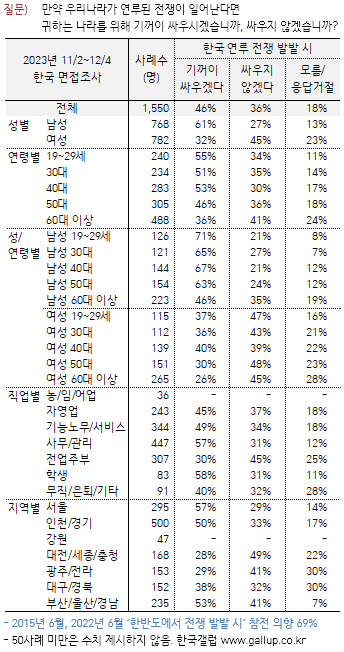
한국인 중에서는 우리나라가 연루된 전쟁 발발 시 46%가 '기꺼이 싸우겠다', 36%는 '싸우지 않겠다'고 답했으며 18%는 의견을 유보했다. 성별 참전 의향자 비율은 남성 61%, 여성 32%며, 연령별로는 20~40대 50%대, 50대 46%, 60대 이상 36%로 나타났다.
◎ 우리나라는 1950년 한국전쟁을 겪었고, 70년 넘게 분단·휴전 상태다. 이번 조사에서는 '우리나라가 연루된 전쟁'이라는 포괄적 전제로 질문했으나, 다른 조사에서 '한반도에서의 전쟁 발발'로 적시했을 때는 69%가 참전 의향을 표명한 바 있다(2015년 6월, 2022년 6월).
──────────────────
FIGHT FOR YOUR COUNTRY
──────────────────
Fewer people are willing to fight for their country compared to ten years ago, shows a poll conducted by Gallup International Association (GIA) in 45 countries covering around half of the global population.
One in two adults around the world declare that they would fight for their country if there was a war, a third would not, and 14% are not sure. It seems that willingness to fight has decreased after the outbreak of several conflicts in recent years. In 2014, for instance, when we witnessed the annexation of Crimea by the Russian Federation, the attitudes to the same question around the world were 61% willing to fight and 27% on the opposite opinion.
Worldwide now there is a clear division between the global South/East and the global North/West in attitudes towards the readiness to fight for their country. While citizens of EU (32% willing to fight), USA (41%) and Canada (34%) are much less willing to fight for their country if there was a war, people in West Asia (77%), the Middle East, where tension is now also high, (73%) and India (76%) are much more ready to fight for their country if needed.
The exception in Europe where people express more willingness to personally defend their country if there was a war is in those countries that are not part of the EU – around 60% there say they are willing to fight.
In terms of individual countries, those most willing (answers “yes”) to fight include Armenia (96%), Saudi Arabia (94%), Azerbaijan (88%), Pakistan (86%) and Georgia (83%). Those least willing (answers “no”) are Italy (78%), Austria (62%), Germany (57%), Nigeria (54%) and Spain (53%).
In Russia 32% (down from 59% ten years ago) say they are ready to go to war for their country if needed, 20% are not and the significant share of 48% replied “don’t know”. But note this question was asked in a country where opposition to the war is a crime. In Ukraine people are more willing to personally defend their country – 62% (no change from ten years ago), but 33% say they would not. And in this country peace negotiations are now forbidden by law.
Kancho Stoychev,
President of Gallup International Association:
“Technological advantage is always crucial in a war but historically the motivation to fight should not be ignored. The elites in the West might be inclined to solve problems by fighting/supporting a war, but western citizens are twice less inclined to bear arms, compared to the citizens of the rest of the World. The narrative in the G-7 plus EU countries that the war in Ukraine is also their own war seems to bear no correlation with the citizens of these countries willingness to fight.”
───
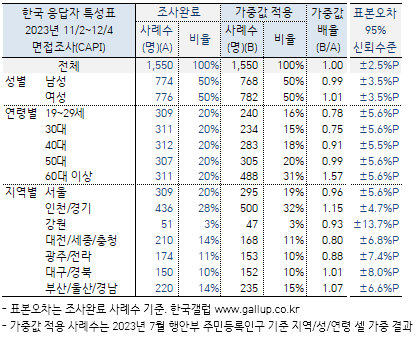
한국 응답자 특성표
| ● 1947년 조지 갤럽 박사가 설립한 갤럽 인터내셔널(Gallup International Association)은 1977년부터 전 세계 회원사들이 매년 말 자국민을 대상으로 경제, 노동, 국제 관계 등 현안에 대한 인식과 새해 전망을 알아보는 〈End of Year Survey〉를 해왔습니다. → Press release for the 120th Anniversary of Dr. George Gallup ● 한국갤럽은 1979년부터 45년간 이 조사에 참여하며, 매년 상반기 몇 차례에 걸쳐 그 결과를 전합니다. 오늘은 앞서 공개한 〈새해 전망과 핵무기 실사용 위험성〉 〈브릭스 확대 관련 인식〉에 이어 〈자국 연루 전쟁 발발 시 참전 의향〉을 알려드립니다. |
자국 연루 전쟁 발발 시 나라를 위해 싸우겠습니까?:
Gallup International 다국가 조사
→ 한국+세계 조사 결과 파일 다운로드(PDF)
/ 세계 조사 개요
· 2023년 10~12월 45개국 성인 총 46,138명 전화/온라인/면접조사(주제별 참여국 상이)
/ 한국 조사 개요
· 조사기간: 2023년 11월 2일~12월 4일
· 표본추출: 층화 집락 확률 비례 추출
· 응답방식: 면접조사원 인터뷰(CAPI)
· 조사대상: 전국(제주 제외) 만 19세 이상 1,550명
· 표본오차: ±2.5%포인트(95% 신뢰수준)
· 응답률: 29.8%(총 접촉 5,196명 중 1,550명 응답 완료)
· 의뢰처: 한국갤럽-Gallup International 자체 조사
조사 결과
────────────
자국 연루 전쟁 발발 시 나라를 위해 싸우겠습니까?
────────────
45개국 시민 중 52% '싸우겠다', '싸우지 않겠다' 33%
- 참전 의향자 많은 나라: 아르메니아(96%), 사우디아라비아(94%), 아제르바이잔(88%)...
- 참전 거부자 많은 나라: 이탈리아(78%), 오스트리아(62%), 독일(57%)...
2023년 10~12월 갤럽 인터내셔널이 세계 45개국 성인 46,138명에게 자국이 연루된 전쟁이 일어난다면 나라를 위해 기꺼이 싸울 것인지, 그렇지 않은지 물었다. 그 결과 52%가 '싸우겠다', 33%는 '싸우지 않겠다'고 답했으며 14%는 의견을 유보했다. 최근 몇 년간 여러 분쟁을 겪으면서 싸우려는 의지가 감소한 것으로 보인다. 예컨대 러시아가 우크라이나 영토였던 크림반도를 무력 합병한 2014년 말 65개국 조사에서는 61%가 참전 의향('싸우겠다' 응답)을 밝혔고, 27%는 거부했다.
◎ 참전 의향자가 많은 나라는 아르메니아(96%), 사우디아라비아(94%), 아제르바이잔(88%), 파키스탄(86%), 조지아(83%) 순이며, 거부자가 많은 나라는 이탈리아(78%), 오스트리아(62%), 독일(57%), 나이지리아(54%), 스페인(53%) 순이다. G7/EU 국가들의 참전 의향자 비율은 31%(:거부 46%)로, 그 외 국가들의 61%(:28%)와 큰 차이를 보였다.
◎ 현재 전쟁 지속 중인 러시아와 우크라이나의 여론은 상반한다. 러시아에서는 32%가 '싸우겠다'(2014년 59%)고 답했고, 20%는 거부했으며 절반가량(48%)은 의견을 유보했다. 우크라이나에서는 참전 의향자가 62%(2014년과 변함없음), 거부자는 33%다. 단, 이 두 나라의 여론은 각국의 특수 상황을 고려하여 볼 필요가 있다: 현재 러시아에서는 전쟁에 반대하는 행위가 범죄시되고, 우크라이나에서는 푸틴 대통령과의 직접적인 평화 협상이 법으로 금지되어 있다.
한국: '싸우겠다' 46%, '싸우지 않겠다' 36%
- 단, 한반도 전쟁 발발 전제 타 조사에서는 69%가 참전 의향 표명
한국인 중에서는 우리나라가 연루된 전쟁 발발 시 46%가 '기꺼이 싸우겠다', 36%는 '싸우지 않겠다'고 답했으며 18%는 의견을 유보했다. 성별 참전 의향자 비율은 남성 61%, 여성 32%며, 연령별로는 20~40대 50%대, 50대 46%, 60대 이상 36%로 나타났다.
◎ 우리나라는 1950년 한국전쟁을 겪었고, 70년 넘게 분단·휴전 상태다. 이번 조사에서는 '우리나라가 연루된 전쟁'이라는 포괄적 전제로 질문했으나, 다른 조사에서 '한반도에서의 전쟁 발발'로 적시했을 때는 69%가 참전 의향을 표명한 바 있다(2015년 6월, 2022년 6월).
──────────────────
FIGHT FOR YOUR COUNTRY
──────────────────
Fewer people are willing to fight for their country compared to ten years ago, shows a poll conducted by Gallup International Association (GIA) in 45 countries covering around half of the global population.
One in two adults around the world declare that they would fight for their country if there was a war, a third would not, and 14% are not sure. It seems that willingness to fight has decreased after the outbreak of several conflicts in recent years. In 2014, for instance, when we witnessed the annexation of Crimea by the Russian Federation, the attitudes to the same question around the world were 61% willing to fight and 27% on the opposite opinion.
Worldwide now there is a clear division between the global South/East and the global North/West in attitudes towards the readiness to fight for their country. While citizens of EU (32% willing to fight), USA (41%) and Canada (34%) are much less willing to fight for their country if there was a war, people in West Asia (77%), the Middle East, where tension is now also high, (73%) and India (76%) are much more ready to fight for their country if needed.
The exception in Europe where people express more willingness to personally defend their country if there was a war is in those countries that are not part of the EU – around 60% there say they are willing to fight.
In terms of individual countries, those most willing (answers “yes”) to fight include Armenia (96%), Saudi Arabia (94%), Azerbaijan (88%), Pakistan (86%) and Georgia (83%). Those least willing (answers “no”) are Italy (78%), Austria (62%), Germany (57%), Nigeria (54%) and Spain (53%).
In Russia 32% (down from 59% ten years ago) say they are ready to go to war for their country if needed, 20% are not and the significant share of 48% replied “don’t know”. But note this question was asked in a country where opposition to the war is a crime. In Ukraine people are more willing to personally defend their country – 62% (no change from ten years ago), but 33% say they would not. And in this country peace negotiations are now forbidden by law.
Kancho Stoychev,
President of Gallup International Association:
“Technological advantage is always crucial in a war but historically the motivation to fight should not be ignored. The elites in the West might be inclined to solve problems by fighting/supporting a war, but western citizens are twice less inclined to bear arms, compared to the citizens of the rest of the World. The narrative in the G-7 plus EU countries that the war in Ukraine is also their own war seems to bear no correlation with the citizens of these countries willingness to fight.”
───
한국 응답자 특성표