- 브릭스(BRICS) 확대 관련 인식 - Gallup International 다국가 조사
- 조사일 : 2023/12/15
- [GallupReport(20240220)_BRICS_GIA.pdf] 다운로드
● 2023년 2월 20일(화) 공개 | 문의: 02-3702-2571/2621/2622
브릭스(BRICS) 확대 관련 인식:
Gallup International 다국가 조사
→ 한국+세계 조사 결과 파일 다운로드(PDF)
/ 세계 조사 개요
- 2023년 10~12월 44개국 성인 총 44,931명 전화/온라인/면접조사(주제별 참여국 상이)
/ 한국 조사 개요
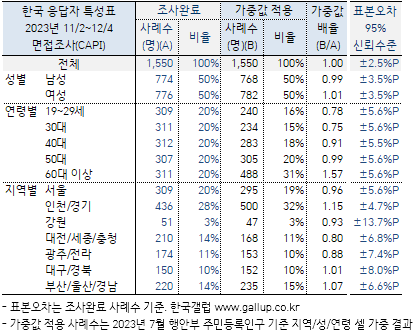
· 조사기간: 2023년 11월 2일~12월 4일
· 표본추출: 층화 집락 확률 비례 추출
· 응답방식: 면접조사원 인터뷰(CAPI)
· 조사대상: 전국(제주 제외) 만 19세 이상 1,550명
· 표본오차: ±2.5%포인트(95% 신뢰수준)
· 응답률: 29.8%(총 접촉 5,196명 중 1,550명 응답 완료)
· 의뢰처: 한국갤럽-Gallup International 자체 조사
조사 결과
────────────
브릭스(BRICS) 확대
────────────
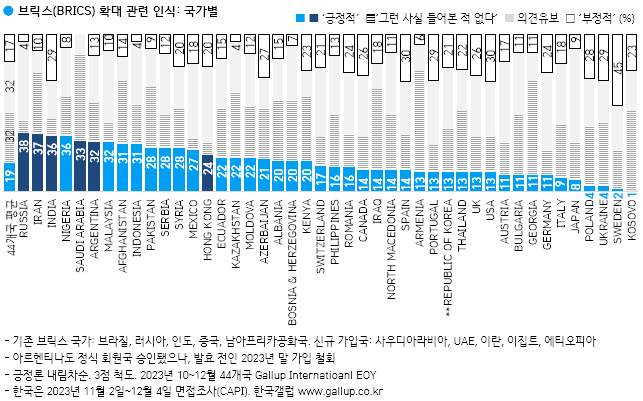
'긍정적' 19%, '부정적' 17%, 비인지 32%, 의견유보 32%
- 긍정론 높은 나라: 러시아(38%), 이란(37%), 인도·나이지리아(36%), 사우디아라비아(33%)...
- 부정론 높은 나라: 스웨덴(45%), 스페인·미국(30%), 인도·포르투갈·우크라이나(29%)...
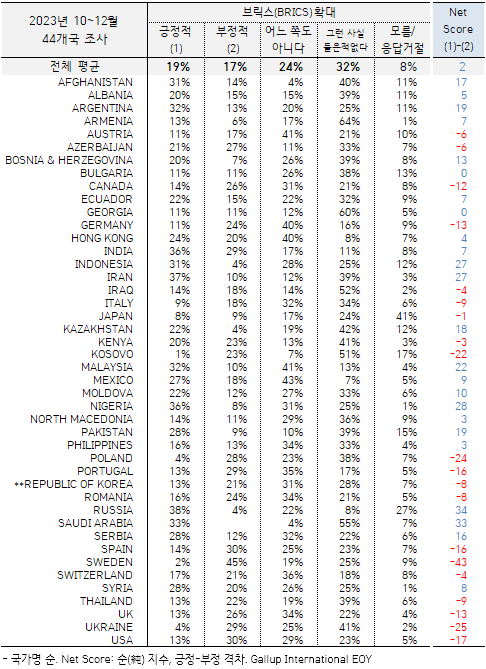
브라질, 러시아, 인도, 중국, 남아프리카공화국으로 구성된 협의체, 일명 ‘브릭스(BRICS)’에 사우디아라비아, 아랍에미리트(UAE), 이란, 이집트, 에티오피아 등 5개국이 새로 가입했다(아르헨티나도 정식 회원국으로 승인됐으나, 발효 전인 2023년 말 가입 철회). 2023년 10~12월 갤럽 인터내셔널이 세계 44개국 성인 44,931명에게 이러한 브릭스 확대에 관해 어떻게 보는지 물었다. 그 결과 '긍정적' 19%, '부정적'이란 반응도 17%로 엇비슷하게 나타났다. 이번 조사에 참여한 시민 셋 중 두 명은 이 사안에 관해 들어본 적이 없거나(32%) 의견을 유보해(어느 쪽도 아니다 24%, 모름/응답거절 8%), 전반적 주목도는 높지 않은 사안인 것으로 짐작된다.
◎ 브릭스 확대를 가장 긍정적으로 보는 나라는 러시아(38%), 이란(37%), 인도·나이지리아(36%) 순이며, 사우디아라비아(33%), 아르헨티나·말레이시아(32%), 아프가니스탄·인도네시아(31%) 등에서도 긍정론이 30%를 넘었다. 이들 나라 중 러시아와 인도는 기존 브릭스 회원국, 이란과 사우디아라비아는 신규 가입국이며 아르헨티나는 발효 전 가입 철회한 곳이다. 다만 사우디아라비아와 이란에서는 브릭스 확대 사실을 들어본 적 없다고 답한 시민이 각각 55%, 39%에 달했다.
◎ 서방국들은 브릭스 확대를 마뜩잖게 보는 듯하다. 특히 러시아·우크라이나 전쟁 발발 후 나토(NATO)에 가입한 북유럽 최대 중립국 스웨덴에서는 부정론이 45%에 달했고, 스페인·미국(30%), 인도·포르투갈·우크라이나(29%), 폴란드(28%) 등에서도 그 비율이 30% 안팎이다.
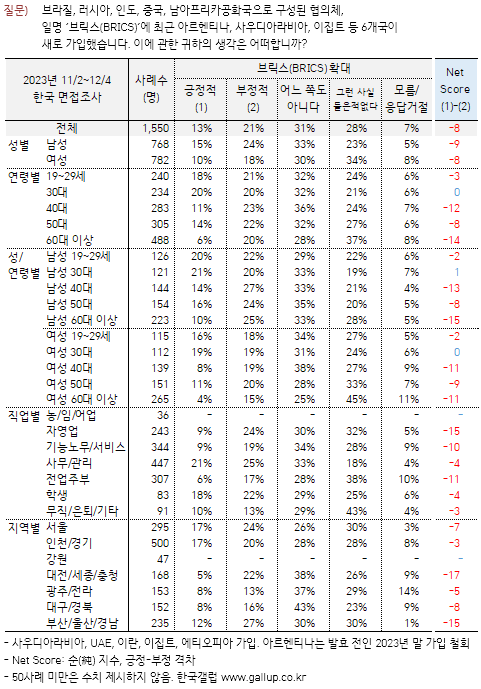
한국: 브릭스 확대 '긍정적' 13%, '부정적' 21%, 비인지 28%, 의견유보 38%
브릭스 확대에 관한 한국인의 생각은 긍정론(13%)과 부정론(21%) 차이가 크지 않고, 비인지 28%, 의견 유보 38%로 파악됐다. 당장 그 영향력이 드러나진 않더라도, 대외 무역 의존도가 높은 우리나라로서는 브릭스 동태를 주시해야 할 것으로 보인다.
참고로, 국제금융센터 보고서(→ 브릭스 확장의 세계 경제 함의)에 따르면 현시점 브릭스 10개국은 전 세계 GDP의 27%, 인구 45%, 영토 31%, 원유생산 42%, 상품수출 25%를 차지하는 등 큰 잠재력을 보유하고 있으며, 평균 5% 내외의 고성장세를 지속하고 있어 향후 국제사회에서의 경제·정치적 영향력이 커질 것으로 전망한다.
──────────────────
BRICS expansion – less than one in five positive about it
──────────────────
Almost a third of the people around the world have never heard of BRICS – reveals a global poll conducted by Gallup International Association representing the opinions of about four billion people in 44 countries. Positive and negative attitudes towards the BRICS alliance are almost equal in shares (19% positive vs. 17% negative). One in four (24%) are neutral while one in three (32%) have never heard of it.
As expected, Western countries are much more negative towards BRICS than the rest of the world. Highest levels of negative opinion are registered in Sweden (45%) where attitudes are strongly affected by the war in Ukraine and current developments with the NATO application. Other countries with high negative shares of answers are also Spain (30%), and the USA (30%).
The rest of the world reacts differently – yet even here positive sentiment is in a minority. Even those countries who form a part of BRICS have considerable proportions of their populations admitting that they do not know about the Alliance nor its expansion. As an example, in Saudi Arabia 55% have never heard of it. Yet among the founding members membership tends to be viewed positively. More than one in three (36%) in India view membership positively, 38% in Russia. In Argentina, which withdrew from the agreement before it took effect, attitudes towards BRICS are positive (32%), 13% negative, 20% neutral, 25% never hearing of it.
Kancho Stoychev,
President of Gallup International Association:
“While BRICS expanded significantly as of January this year, negative attitudes towards this organisation strongly prevail among the citizens of G-7 (plus EU) countries. The division of the World into two economic blocs might be the end of the globalisation led by one collective centre and this clearly creates discontent and hostility in the West. But although the combined population of all BRICS countries is more than a half of the world’s population, still the global awareness of this relatively new bloc is low.”
───
한국 응답자 특성표
| ● 1947년 조지 갤럽 박사가 설립한 갤럽 인터내셔널(Gallup International Association)은 1977년부터 전 세계 회원사들이 매년 말 자국민을 대상으로 경제, 노동, 국제 관계 등 현안에 대한 인식과 새해 전망을 알아보는 〈End of Year Survey〉를 해왔습니다. → Press release for the 120th Anniversary of Dr. George Gallup ● 한국갤럽은 1979년부터 45년간 이 조사에 참여하며, 매년 상반기 몇 차례에 걸쳐 그 결과를 전합니다. 오늘은 앞서 공개한 〈새해 전망과 핵무기 실사용 위험성〉에 이어 〈브릭스 확대 관련 인식〉을 알려드립니다. |
브릭스(BRICS) 확대 관련 인식:
Gallup International 다국가 조사
→ 한국+세계 조사 결과 파일 다운로드(PDF)
/ 세계 조사 개요
- 2023년 10~12월 44개국 성인 총 44,931명 전화/온라인/면접조사(주제별 참여국 상이)
/ 한국 조사 개요
· 조사기간: 2023년 11월 2일~12월 4일
· 표본추출: 층화 집락 확률 비례 추출
· 응답방식: 면접조사원 인터뷰(CAPI)
· 조사대상: 전국(제주 제외) 만 19세 이상 1,550명
· 표본오차: ±2.5%포인트(95% 신뢰수준)
· 응답률: 29.8%(총 접촉 5,196명 중 1,550명 응답 완료)
· 의뢰처: 한국갤럽-Gallup International 자체 조사
조사 결과
────────────
브릭스(BRICS) 확대
────────────
'긍정적' 19%, '부정적' 17%, 비인지 32%, 의견유보 32%
- 긍정론 높은 나라: 러시아(38%), 이란(37%), 인도·나이지리아(36%), 사우디아라비아(33%)...
- 부정론 높은 나라: 스웨덴(45%), 스페인·미국(30%), 인도·포르투갈·우크라이나(29%)...
브라질, 러시아, 인도, 중국, 남아프리카공화국으로 구성된 협의체, 일명 ‘브릭스(BRICS)’에 사우디아라비아, 아랍에미리트(UAE), 이란, 이집트, 에티오피아 등 5개국이 새로 가입했다(아르헨티나도 정식 회원국으로 승인됐으나, 발효 전인 2023년 말 가입 철회). 2023년 10~12월 갤럽 인터내셔널이 세계 44개국 성인 44,931명에게 이러한 브릭스 확대에 관해 어떻게 보는지 물었다. 그 결과 '긍정적' 19%, '부정적'이란 반응도 17%로 엇비슷하게 나타났다. 이번 조사에 참여한 시민 셋 중 두 명은 이 사안에 관해 들어본 적이 없거나(32%) 의견을 유보해(어느 쪽도 아니다 24%, 모름/응답거절 8%), 전반적 주목도는 높지 않은 사안인 것으로 짐작된다.
◎ 브릭스 확대를 가장 긍정적으로 보는 나라는 러시아(38%), 이란(37%), 인도·나이지리아(36%) 순이며, 사우디아라비아(33%), 아르헨티나·말레이시아(32%), 아프가니스탄·인도네시아(31%) 등에서도 긍정론이 30%를 넘었다. 이들 나라 중 러시아와 인도는 기존 브릭스 회원국, 이란과 사우디아라비아는 신규 가입국이며 아르헨티나는 발효 전 가입 철회한 곳이다. 다만 사우디아라비아와 이란에서는 브릭스 확대 사실을 들어본 적 없다고 답한 시민이 각각 55%, 39%에 달했다.
◎ 서방국들은 브릭스 확대를 마뜩잖게 보는 듯하다. 특히 러시아·우크라이나 전쟁 발발 후 나토(NATO)에 가입한 북유럽 최대 중립국 스웨덴에서는 부정론이 45%에 달했고, 스페인·미국(30%), 인도·포르투갈·우크라이나(29%), 폴란드(28%) 등에서도 그 비율이 30% 안팎이다.
한국: 브릭스 확대 '긍정적' 13%, '부정적' 21%, 비인지 28%, 의견유보 38%
브릭스 확대에 관한 한국인의 생각은 긍정론(13%)과 부정론(21%) 차이가 크지 않고, 비인지 28%, 의견 유보 38%로 파악됐다. 당장 그 영향력이 드러나진 않더라도, 대외 무역 의존도가 높은 우리나라로서는 브릭스 동태를 주시해야 할 것으로 보인다.
참고로, 국제금융센터 보고서(→ 브릭스 확장의 세계 경제 함의)에 따르면 현시점 브릭스 10개국은 전 세계 GDP의 27%, 인구 45%, 영토 31%, 원유생산 42%, 상품수출 25%를 차지하는 등 큰 잠재력을 보유하고 있으며, 평균 5% 내외의 고성장세를 지속하고 있어 향후 국제사회에서의 경제·정치적 영향력이 커질 것으로 전망한다.
──────────────────
BRICS expansion – less than one in five positive about it
──────────────────
Almost a third of the people around the world have never heard of BRICS – reveals a global poll conducted by Gallup International Association representing the opinions of about four billion people in 44 countries. Positive and negative attitudes towards the BRICS alliance are almost equal in shares (19% positive vs. 17% negative). One in four (24%) are neutral while one in three (32%) have never heard of it.
As expected, Western countries are much more negative towards BRICS than the rest of the world. Highest levels of negative opinion are registered in Sweden (45%) where attitudes are strongly affected by the war in Ukraine and current developments with the NATO application. Other countries with high negative shares of answers are also Spain (30%), and the USA (30%).
The rest of the world reacts differently – yet even here positive sentiment is in a minority. Even those countries who form a part of BRICS have considerable proportions of their populations admitting that they do not know about the Alliance nor its expansion. As an example, in Saudi Arabia 55% have never heard of it. Yet among the founding members membership tends to be viewed positively. More than one in three (36%) in India view membership positively, 38% in Russia. In Argentina, which withdrew from the agreement before it took effect, attitudes towards BRICS are positive (32%), 13% negative, 20% neutral, 25% never hearing of it.
Kancho Stoychev,
President of Gallup International Association:
“While BRICS expanded significantly as of January this year, negative attitudes towards this organisation strongly prevail among the citizens of G-7 (plus EU) countries. The division of the World into two economic blocs might be the end of the globalisation led by one collective centre and this clearly creates discontent and hostility in the West. But although the combined population of all BRICS countries is more than a half of the world’s population, still the global awareness of this relatively new bloc is low.”
───
한국 응답자 특성표